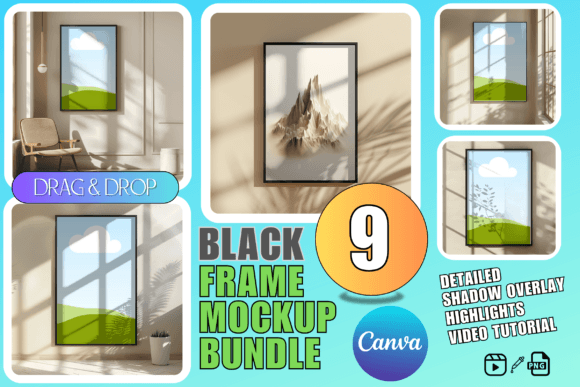
Design Smarter: The Power of Canvas Mockup Templates
For any creative, entrepreneur, or small business owner, the constant demand for high-quality visual content can feel relentless. You need professional posters, engaging social media graphics, and cohesive brand materials, but the time and budget required for custom design work aren't always available. This is where the practicality of a well-designed Canvas Mockup Canva Poster Templates becomes an indispensable part of your creative toolkit. It’s not about cutting corners; it’s about working efficiently without sacrificing the professional polish your brand deserves.
What Exactly is a Canvas Mockup Template?
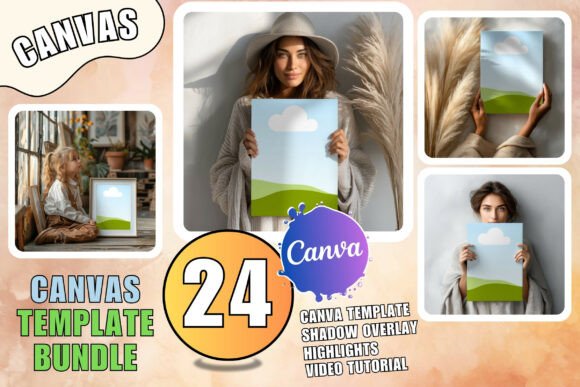
At its core, a Canvas Mockup Canva Poster Template is a pre-designed digital file that gives you a structured, visually appealing starting point for your own projects. Think of it as a professional blueprint. Instead of staring at a blank canvas in Canva, you receive a link to access a template already composed with thoughtful layouts, placeholder text, and graphic elements. The visual personality of these templates often leans towards a clean, modern, and versatile aesthetic. They are crafted to provide a strong visual hierarchy, guiding the viewer's eye naturally from the headline to the supporting information. This inherent structure is what makes them so valuable—it does the heavy lifting of layout and composition, allowing you to focus on your unique message and branding.
The appeal lies in their balance of style and function. A good template isn't overly ornate or trendy to the point of becoming dated quickly. Instead, it offers a solid foundation—perhaps using a combination of a bold serif font for headings and a clean sans serif font for body text—that communicates clarity and professionalism. This kind of modern typography ensures your content remains readable and impactful across various applications.
From Digital Feed to Printed Wall: Where These Templates Shine
The true strength of a Canvas Mockup Canva Poster Templates lies in its remarkable adaptability. It’s a multi-purpose design asset that can be the starting point for a wide array of projects, saving you time and ensuring consistency across your entire brand presence.
Consider a small business owner launching a new product. They can use the template to create:
- A Series of Social Media Graphics: Quickly generate consistent posts for Instagram, Facebook, and Pinterest to announce the launch, share details, and drive traffic.
- A Printable In-Store Poster: With a simple download, the same design can be scaled and printed for point-of-sale displays or event signage.
- A Digital Flyer or Email Banner: Adapt the layout for a newsletter or a downloadable PDF to share with partners and customers.
For bloggers and content creators, the applications are just as practical. Use a template to design a cohesive series of quote graphics for your feed, create a visually appealing PDF lead magnet, or mock up the cover for your next digital ebook. The included video tutorial is crucial here, as it demystifies the process, showing you exactly how to drag and drop your own images, change colors to match your brand identity, and swap out fonts to align with your style guide. This transforms a static template into a dynamic part of your creative workflow.
Making the Template Your Own: Practical Guidance
While the template provides the structure, your job is to infuse it with your brand's unique voice. Here’s how to approach it effectively.
Evaluate the Fit: Before you start customizing, ask if the template's overall mood aligns with your project. Is it serious and corporate, or playful and whimsical? A template with a handwritten font accent might be perfect for a craft blog but less suitable for a financial advisor's brochure. Look at the included styles—does it offer the flexibility you need?
Master Font Pairing: The template likely comes with suggested font pairing. While you can change them, pay attention to why the original pairing works. A common and effective approach is contrasting a strong display font for headlines with a highly readable body font. When you change the fonts, maintain that contrast. If you swap the headline serif for a script font, ensure your body text remains a simple, legible sans serif to avoid visual chaos.
Prioritize Readability: This is non-negotiable. After adding your text, step back. Is the text large enough to be read easily, especially on a mobile screen? Is there sufficient contrast between the text color and the background? A beautifully designed poster fails if its message is lost. Test it by viewing it on your phone and printing a small version.
Understand the Licensing: The product description states you only need a free Canva account, which is a huge accessibility benefit. However, it’s always wise to understand the terms. These templates are typically for your personal and commercial use in creating final designs for your clients or business, but you cannot resell the template file itself. This is standard for most premium font and design asset licenses.
By treating Canvas Mockup Canva Poster Templates not as a finished product but as a powerful starting framework, you empower yourself to produce consistent, professional, and engaging visual content. It’s a practical solution for building a recognizable brand presence across every touchpoint, from your website and social media to printed materials, ensuring you look polished and prepared, no matter the project.