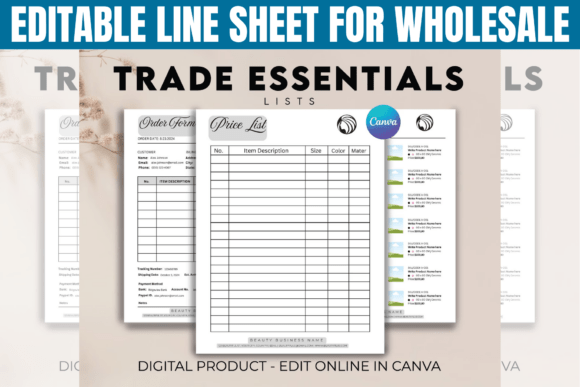
Editable Line Sheet for Wholesale: A Designer's Guide
For any small business or creative maker, stepping into the wholesale market is a huge milestone. You've perfected your product, and now you need to present it to boutique owners and retail buyers. The bridge between your workshop and their storefront is often a single, crucial document: the line sheet. Getting this right can mean the difference between a cluttered, confusing PDF and a polished, professional presentation that secures an order. This is where a thoughtfully designed Editable Line Sheet for Wholesale becomes an indispensable tool, transforming a simple list of products into a compelling sales asset.
More Than a Template: A Strategic Brand Asset
At first glance, you might see a Canva template. But let's look closer, as a designer would. This Editable Line Sheet for Wholesale isn't just about dropping in product photos. Its visual character is one of clean, structured clarity. The layout uses a deliberate visual hierarchy—guiding the buyer's eye naturally from the product image to the name, then to the essential details like pricing and order minimums. This isn't accidental; it's a core principle of effective editorial design. The use of white space, consistent alignment, and a restrained color palette (which you can customize to your brand) creates a sense of calm professionalism. It whispers competence and reliability, which is exactly what a wholesale buyer needs to hear.
This template functions as a foundational piece of your brand identity. Think of it as part of your broader design assets kit. When you upload your logo, apply your brand's specific color hex codes, and select your premium font pairing, the template ceases to be a generic form. It becomes an extension of your brand's personality. A modern, minimalist jewelry line will look vastly different from a rustic, hand-poured candle brand, yet both can use this same underlying structure to achieve a cohesive and recognizable presence. This consistency across all touchpoints—from your website to your packaging design to this line sheet—is what builds a memorable brand identity.
Practical Applications Across Your Business
The true value of this resource is in its flexibility. Its primary role, of course, is as a digital catalog for wholesale outreach. You can generate a PDF and email it directly to prospective buyers, attach it to a wholesale application, or have it ready to share on a video call. The user-friendly layout ensures that even a time-pressed retailer can quickly scan and understand your offerings.
But its utility extends further. Consider these practical uses:
- Trade Show Companion: Print high-quality copies for in-person meetings at markets or trade shows. It's far more professional than a loose collection of photos and scribbled notes.
- Internal Reference: Use it as a living document for your own team. It helps keep product names, descriptions, and pricing consistent across social media graphics, your website, and internal communications.
- Seasonal Updates: Because it's fully editable, launching a new collection is simple. Duplicate your template, swap out the old images and text for the new line, and you have an updated sales sheet in minutes, not days.
- Retailer Support: Share a customized version with your existing wholesale partners to highlight new arrivals or highlight best-sellers they might want to reorder.
Integrating with Your Design Workflow
Choosing and implementing this Editable Line Sheet for Wholesale is a strategic decision. Start by evaluating the template's structure against your product range. Do you sell single items or curated gift sets? Does the layout have space for variant information, like color or size swatches? The best templates offer enough flexibility to accommodate different product types without feeling crowded.
A key part of customization is your font pairing. The template likely uses a clean sans serif font for body text, prioritizing readability. You might pair this with a complementary serif font for headings to add a touch of tradition, or a subtle script font for your brand name to inject personality. The goal is harmony, not competition. Your typography should support the content, not distract from it. This is where understanding modern typography principles helps—ensuring sufficient contrast, appropriate sizing, and consistent application.
When customizing, think like a buyer. Use high-resolution product photos on a clean, uncluttered background. Write concise, benefit-driven descriptions that go beyond just features. Be clear and upfront with all pricing and order terms. The design of the sheet should make this information effortless to find. After you've made your edits, always do a final review. Print a test page to check readability. Zoom out on the PDF to see the overall visual flow. Ask a colleague if they can easily understand how to place an order from the sheet alone. This attention to detail is what separates an amateur attempt from a professional and polished presentation