Bookshelf Tracker: A Reading Journal PDF for Visual Readers
For many of us, a bookshelf is more than just furniture; it's a visual story of our interests, a timeline of our intellectual journey, and a curated display of the worlds we've visited. Yet, in the digital age, our reading lists often become static, text-heavy spreadsheets or forgotten notes on a phone. This disconnect between the tactile joy of a physical bookshelf and the practical need for digital organization is where the Bookshelf Tracker | Reading Journal PDF finds its purpose. It’s a creative tool designed to bridge that gap, offering a beautifully illustrated, customizable space to document your reading life.
A Canvas for Your Literary Collection
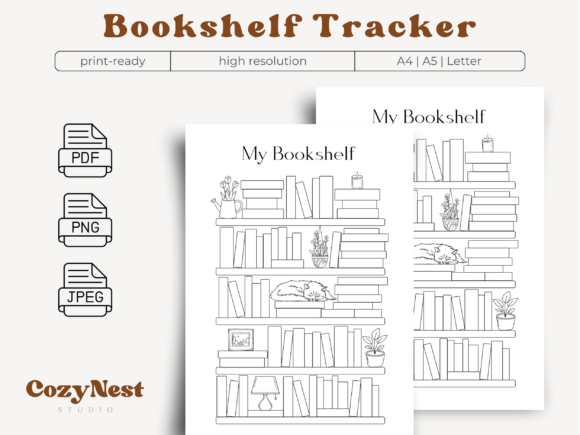
At its core, this reading journal PDF presents a charming illustration of empty book spines on a shelf. The design is intentionally minimalist yet warm, with a focus on clean lines and ample white space. This isn't a cluttered scrapbook page; it's a refined canvas. The personality is approachable and slightly nostalgic, evoking the comfort of a personal library without feeling dated. The style is versatile enough to appeal to a wide range of tastes, from the modern minimalist who appreciates clean design to the avid journaler who loves adding a personal, artistic touch.
The real magic lies in its utility as a design asset. You’re not just filling in a form; you’re engaging in a small act of creative curation. By coloring in the spines and writing book titles, you transform a generic template into a unique reflection of your tastes. This process turns tracking into a mindful, enjoyable ritual. For the content creator or blogger, this visual approach to a reading log can become engaging social media content, offering a snapshot of current reads that’s far more compelling than a plain list. For the entrepreneur or marketer in a creative field, maintaining such a visual log can be a subtle source of inspiration, a record of ideas absorbed from various genres.
Practical Applications Beyond the Personal Journal
While the primary use is personal reading tracking, the Bookshelf Tracker | Reading Journal PDF functions as a flexible creative font and layout system for several practical scenarios. Its value extends into commercial and professional realms with thoughtful application.
- Brand Building & Marketing: Authors, publishers, and independent bookstores can use this tracker as a branded freebie or lead magnet. Offering a beautifully designed PDF to newsletter subscribers adds tangible value and reinforces a brand identity centered on the love of books. It’s a subtle yet effective tool for audience engagement.
- Editorial & Content Design: For book bloggers, reviewers, or literary magazines, this template can be adapted into a featured graphic. A "Staff Picks" or "Monthly TBR" visual created with this tracker provides consistent, recognizable editorial design for websites and social media graphics, strengthening visual hierarchy and brand recognition.
- Packaging & Product Inserts: Small businesses selling bookish merchandise, subscription boxes, or stationery could include a printed version as a value-added insert. It enhances the unboxing experience and provides a functional keepsake, contributing to a perception of quality and thoughtful curation.
- Digital Planning & Education: Teachers, librarians, and reading group facilitators can use the digital files for collaborative projects or classroom reading challenges. The PNG and JPEG formats allow for easy integration into digital planners or presentation software.
Integrating the Tracker: A Guide for Creators and Hobbyists
Choosing to use a tool like this is about more than just aesthetics; it's about integrating it effectively into your workflow. Here’s some practical guidance for getting the most out of it.
Evaluate the Fit: Consider your primary goal. If it's purely for personal enjoyment, the A5 size is perfect for slipping into a planner. If you aim to use it for social media content or as a digital background, the larger Letter or A4 PNG files offer more flexibility for editing and cropping. The included printing instructions are crucial here—understanding bleed and margin settings ensures a professional result, whether you print at home or use a service.
Test Font Pairings for Titles: The tracker itself uses a simple, legible style for the shelf illustration, but the titles you add are your chance for personal expression. Experiment with different writing instruments—fine-tip pens for a clean look, brush pens for a more artistic flair. For digital use, overlaying text with a complementary script font for titles and a clean sans serif font for notes can create a polished, modern typography layout. This practice mirrors real-world font pairing in logo design or web design.
Leverage the File Variety: Don’t just use one format. The PDF is ideal for printing. The PNG, with its transparent background, is perfect for layering over other images in design software like Canva or Photoshop for packaging design mockups or blog post graphics. The JPEG is a straightforward option for quick sharing. Using all three allows this single asset to serve multiple projects, embodying the efficiency of a well-chosen design asset.
Consider Commercial Licensing: For the small business owner or entrepreneur considering this for commercial use (like as a branded insert), it's essential to review the licensing terms provided with the purchase. Typically, such licenses allow for use in physical products for sale but may have restrictions on redistributing the digital file itself. Clarity here protects your business and respects the creator's work.
The Bookshelf Tracker | Reading Journal PDF is ultimately a tool for storytelling—your own reading story. It encourages a slower, more visual form of record-keeping that can enhance personal enjoyment, professional branding, and creative projects alike. By treating it not just as a checklist but as a canvas, you unlock its potential to make your reading journey a visible and celebrated part of your life.